- Services
- Acute Kidney Injury (AKI) & Critical Care Nephrology
Our Specialty
- Chronic Kidney Disease (CKD) Care & Prevention
- Pregnancy & Kidney Disease
- Electrolyte & Acid-Base Disorders
- Kidney Biopsy & Glomerular Disease Clinic
- Dialysis
- Hypertension & Cardio-Renal Clinic
- Kidney Stones & Metabolic Evaluation
- Pediatric Nephrology
- Preventive Kidney Health Programs
Acute Kidney Injury (AKI) & Critical Care Nephrology
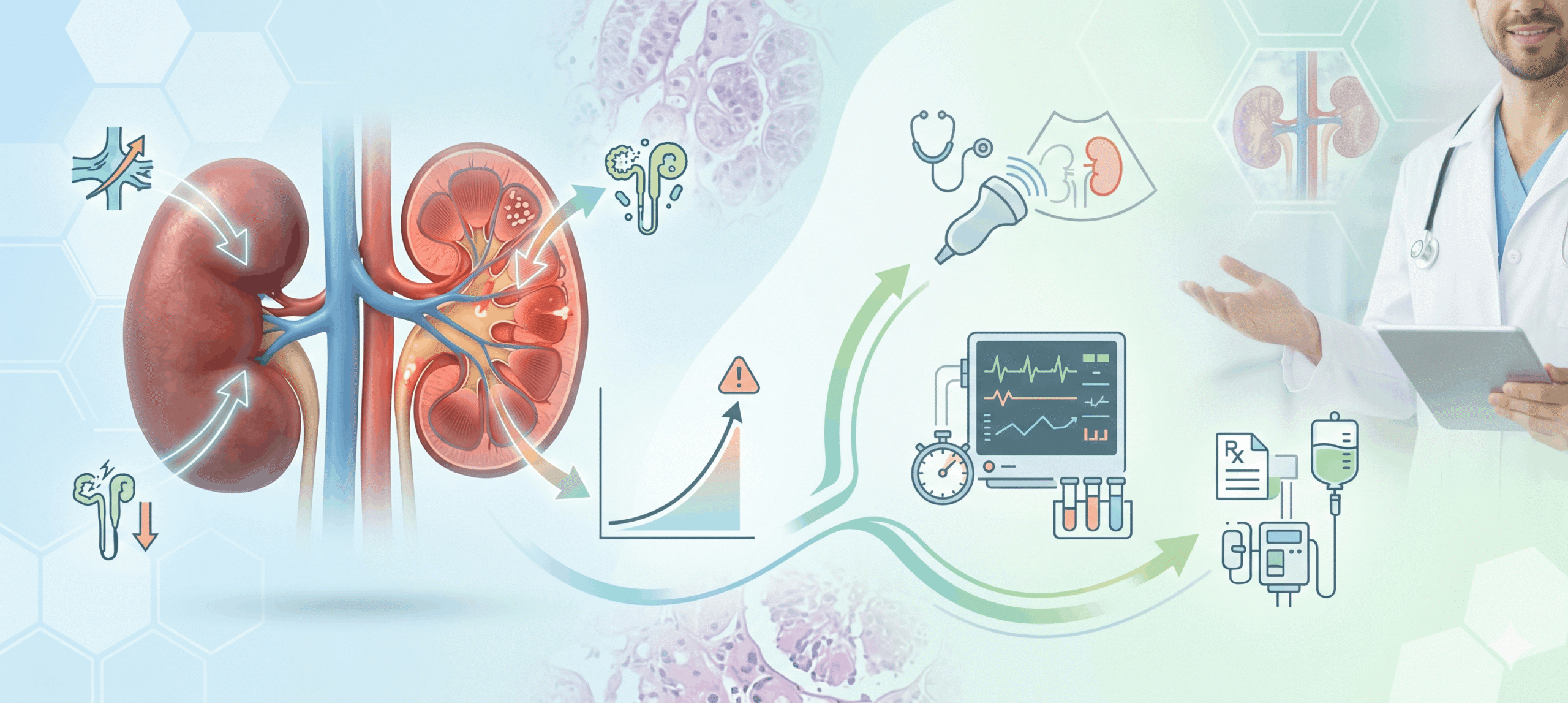
Acute Kidney Injury (AKI) is a Sudden Drop In Kidney Function—often happening within hours or days. It is common in hospitalized or critically ill patients and needs Quick, Precise, And Expert Care.
Our focus is simple: Act Fast, Stabilize Early, And Prevent Long-Term Damage.
ICU-Related AKI
AKI is frequently seen in ICU patients due to serious illness or organ stress.
We provide:
- Close kidney function monitoring
- Fluid balance management
- Coordination with ICU team
- Early intervention to prevent worsening
Timely Care In ICU Can Be Life-Saving.
Sepsis-Associated AKI
Severe infections (sepsis) can directly affect kidney function.
Our approach includes:
- Early identification of kidney involvement
- Infection control along with kidney support
- Maintaining blood pressure and circulation
- Preventing multi-organ damage
Managing Infection + Protecting Kidneys = Better Outcomes.
Cardiorenal Syndrome
The heart and kidneys are deeply connected—when one suffers, the other is affected.
We focus on:
- Balancing heart and kidney treatment
- Managing fluid overload safely
- Optimizing medications for both organs
- Continuous monitoring in critical cases
A Careful Balance Is Key Here.
Drug-Induced Kidney Injury
Certain medicines can harm the kidneys if not monitored properly.
We help by:
- Identifying harmful drugs early
- Adjusting doses based on kidney function
- Stopping or replacing risky medications
- Preventing further damage
Safe Medication Use = Safer Kidneys.
Contrast Nephropathy Prevention
Some scans (like CT with contrast) can affect kidney function, especially in high-risk patients.
We ensure:
- Risk assessment before procedures
- Proper hydration protocols
- Use of safer alternatives when possible
- Post-procedure kidney monitoring
Prevention Here Is Much Easier Than Treatment.
RRT (Dialysis) Decision-Making
Not every AKI patient needs dialysis—but when needed, timing is critical.
We guide:
- When to start dialysis
- Type of dialysis best suited (temporary support)
- Monitoring response to treatment
- Gradual recovery planning
Right Decision At The Right Time Makes All The Difference.
Electrolyte Emergencies
Imbalance of salts like potassium, sodium, or acid levels can become life-threatening.
We manage:
- High potassium (risk to heart)
- Severe sodium imbalance
- Acid-base disturbances
- Rapid correction with safe protocols
Quick Action Here Can Prevent Serious Complications.
Our Approach
In critical care nephrology, every minute counts.
At Dr. Divya Bajpai’s practice, we focus on:
- Rapid diagnosis and intervention
- Evidence-based critical care
- Close coordination with ICU teams
- Clear communication with patient families
Because In Emergencies, Speed + Accuracy = Survival And Recovery.